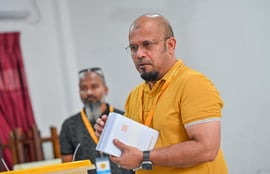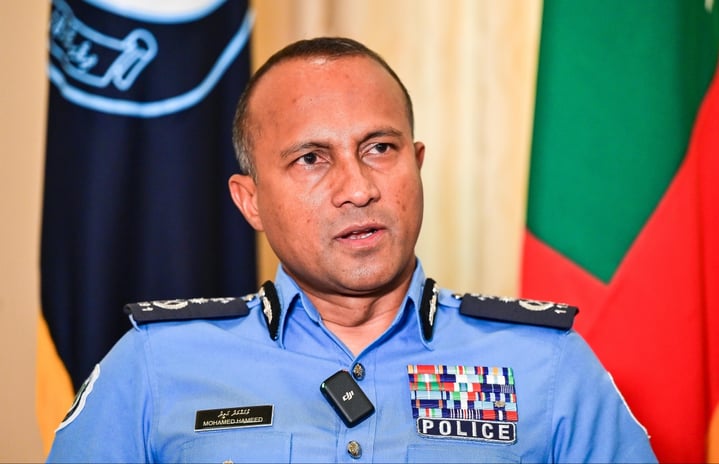
Former Police Commissioner (PC) Mohamed Hameed said yesterday that swift changes of Commissioner of Police will lower the public's trust in the police institution.
PC Ismail Naveen retired from the force yesterday after having served for 32 years, with former PC Hameed's blog post stating that the appointment of three PC's over the course of two and a half years is not in line with making the police agency a professional institute.
Hameed said that anyone who thinks of the stability of the agency should be concerned over such matters.
He also said upholding policies will be disrupted after leadership changes take place, with it affecting every level there is.
"This lowers operational clarity. Dissatisfaction will increase within the command structure. Strengthening of the agency is delayed due to leadership changes. Policies always change as well," said Hameed.
"This causes public trust in us to sway. Questions begin to form as to whether the institution is being run in the interest of the nation or for political prosperity."
The first PC to have been appointed during the current government was Ali Shujau. However, Shujau resigned due to the dissatisfaction that came about due to the heated protests that began after the fall of Yumn from a building located in Male'.
After that, PC Naveen was appointed last June.
Hameed has also expressed concern regarding the changes that will be brought about to Maldives Police Service.
He stated that the beginning of the discussions to amend the Maldives Police Service Act and abolish the Police Board or narrow the power held by the board, centralizing control in the appointment of commissioners and deputy commissioners, getting rid of transparent processes in appointing leaders and changes to local policing power are included in his list of concerns.
"The curtailing of independence in regional frameworks will be an obstacle in the progression of community focused policing. This is not some small technical change. These are structural shifts that changes the balance between political powers and institutional independence," said Hameed.