The Attorney General’s Office stated in the Supreme Court today that the Constitution does not specify a particular way the question must be phrased when conducting a public referendum, and that it is a matter left to the discretion of the President.
The trial of the constitutional case submitted to the Supreme Court to stop the public referendum, decided to be held on whether to conduct the Presidential Election and the Parliamentary Election on the same day, began today.
The case was submitted to the Supreme Court by lawyer Aik Ahmed Easa and lawyer Ibrahim Shiyam, who are part of the MDP legal team, raising legal questions regarding the question decided to be asked in the vote.
The question asks whether it is favored to ratify the bill on the 8th amendment to the Constitution, which was passed to establish the practice of holding the two elections on the same day and to define the rules for calculating the term of the Parliament.
Presenting the case in court today, lawyer Shiyam argued that the bill proposing the eighth amendment to the constitution includes provisions beyond the scope of Article 262, and that putting the entire bill to a referendum would obscure the specific changes from the public.
"Therefore, as this question is not designed within the principles mandated by Article 262 (b) of the Constitution, I request a determination that the referendum scheduled for April 4th must not be held," Shiyam said.
Responding to the case, the lawyer from the Attorney General’s Office, Hawwa Sana, stated that the referendum question was not designed in contradiction to Article 262 of the Constitution. This is because Article 262 (b) of the Constitution is not an article that describes how the phrasing of the question should be or how the question should be designed. According to her, that article is one that states that specific changes brought to the Constitution can only be ratified by the President after obtaining a majority of the citizens through a referendum.
Prosecution said she believes that the determination of how the referendum question should be phrased is left to the President. Lawyer Sana stated that the procedure the President must follow in this matter is described in the Act on Referendums, and according to the law, the question must be determined by a decree issued by the President.
According to Sana, a contradiction with Article 262 of the Constitution cannot be claimed in connection to the question. However, she said that the article could be contradicted in a situation where something stated in the article is passed by the Parliament but not put to a public vote before ratification. Otherwise, the lawyer said, it would be if the President ratifies the bill in contradiction to the decision made by the citizens in the public vote.
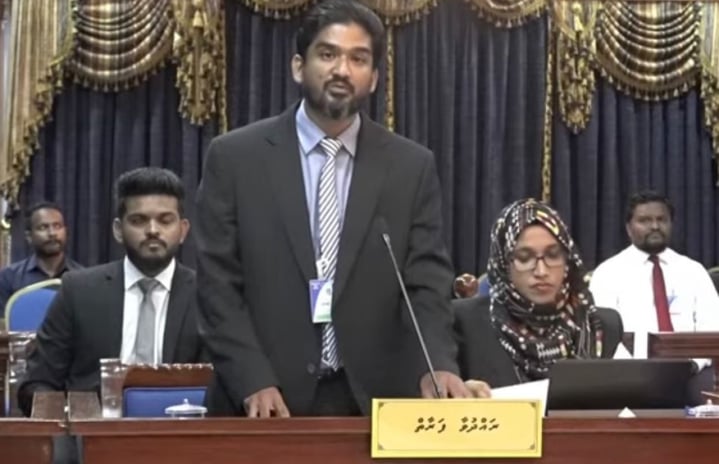
Speaking on behalf of the two lawyers who submitted the case, lawyer Ali Hussain stated that even if the power to design the question is left to the President, that power must be used to perform the tasks mandated by the Constitution. He argued that the citizens' time and money should not be spent on something that does not necessarily need to be asked.
Ali stated that it is mandatory to go to a public vote to bring changes to the term of the Parliament, and therefore, since six months are being deducted from the Parliament term according to the bill currently passed, questions can be asked of the citizens regarding that matter.
However, Ali noted that due to the way the referendum question is phrased, the citizens are not aware that six months are being deducted from the term of the current Parliament.
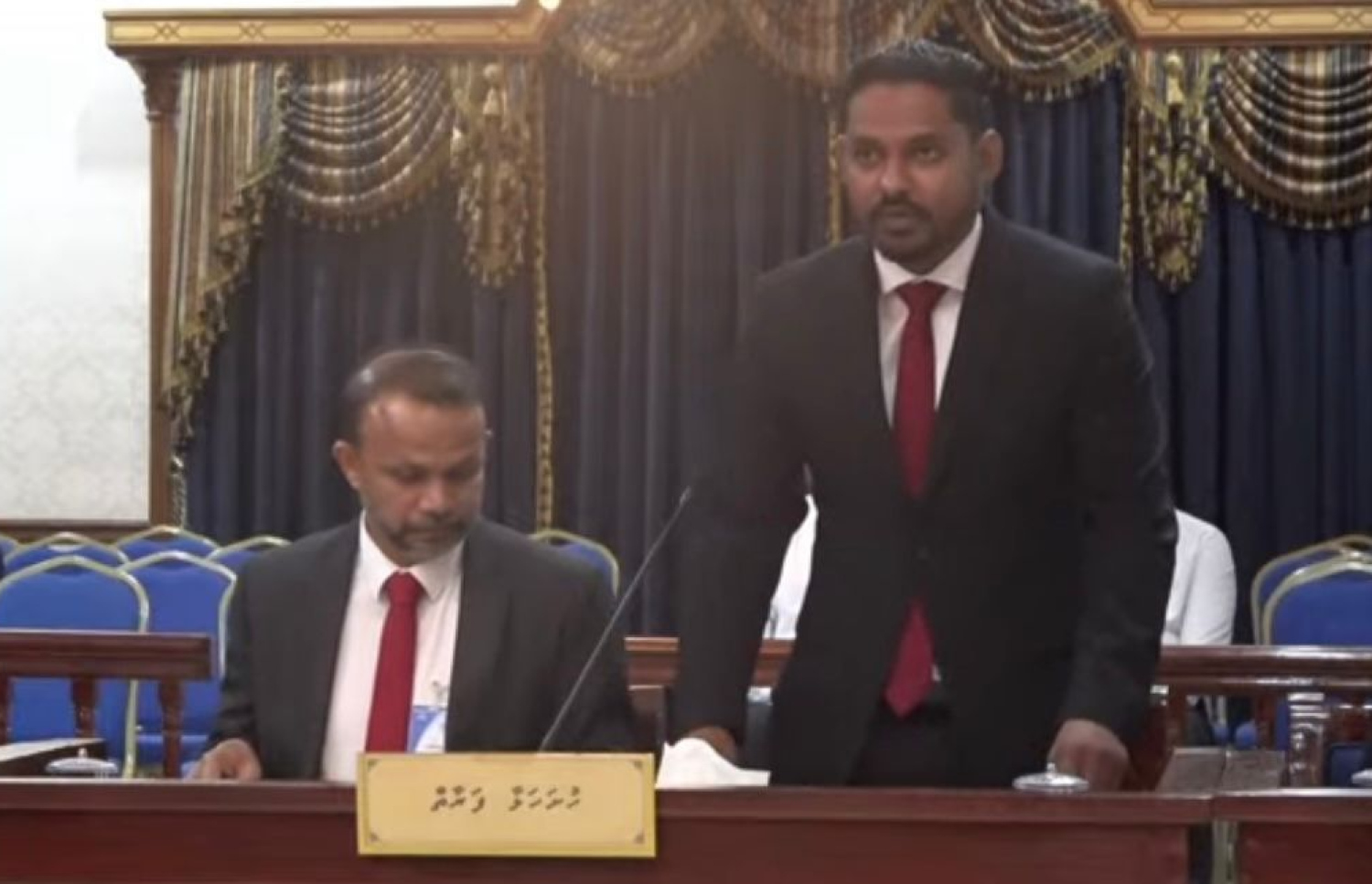
The lawyer for the Elections Commission, Aaliya Haneef, stated that the role of the Elections Commission is to ask the citizens the referendum question in the manner it is sent to the Commission. The lawyer said that bringing changes to that question is not a power vested in the Commission. Therefore, the lawyer also raised a procedural point regarding proceeding with the Commission included as a party to the case.
The hearings for this case were concluded today. Chief Justice Abdul Ghanee Mohamed stated that unless there is anything further to clarify, the next session will be for the delivery of the verdict. Presiding over the case, in addition to the Chief Justice, are Judge Hussain Shaheed, Judge Abdulla Hameed, Judge Ali Rasheed Hussain, and Judge Dr. Mohamed Ibrahim.
Ali, the former MP for Kendhoo constituency, also filed a constitutional case at the Supreme Court challenging the public referendum. He sought a ruling that the amendment passed by parliament to hold presidential and parliamentary elections on the same day is void.
However, the court registrar has decided not to accept the case.