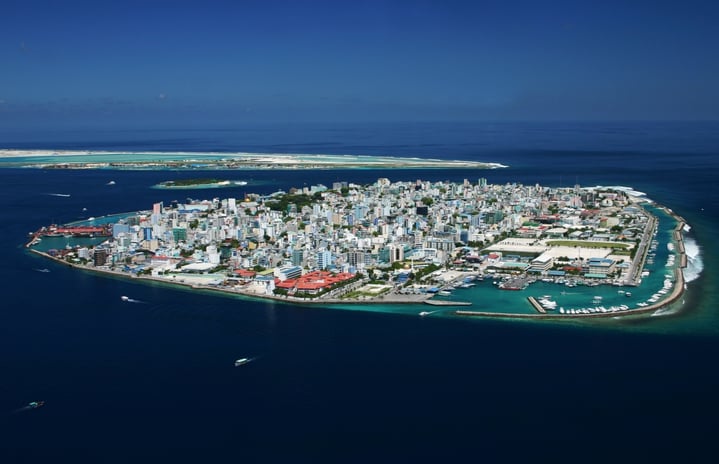
In this sun-kissed nation of
shimmering lagoons and palm-fringed beaches, Maldives’ local businesses find
themselves caught in a difficult economic cross-current.
Beneath the
postcard-perfect tourism industry lies a more sobering reality: a sovereign debt
burden that is reshaping the fortunes of small enterprises and larger firms
alike.
For many businesses, this has meant
adapting to shifting policies, coping with rising costs, and surviving in a
shifting financial landscape.
According to Ministry of Finance
data, at the end of the first quarter of 2025, the total government debt of the
Maldives stood at MVR 126 billion, roughly 98 percent of GDP.
The World Bank reported that this
ratio had crossed 112 per cent of GDP, with projections suggesting it may
remain elevated for some years to come.
By late 2024, the figure climbed even
higher, surpassing 134 percent of GDP, translating into more than USD 9.4
billion in combined public and publicly guaranteed debt.
For a small island nation whose
economy relies heavily on tourism and imports, these numbers represent not just
fiscal statistics but daily realities for the business community.
The burden of sovereign debt exerts
pressure on the reserves that sustain trade and commerce. By the end of 2023,
Maldives held foreign reserves of about USD 582.81 million, dipping to USD
364.36 million in September 2024 before climbing to USD 667.18 million in
December 2024. Foreign reserves stood at USD 767.37 million in July 2025.
However, these figures do not fully
cover the Maldives’ import needs. Maldives Customs data show the country
requires about USD 66 million in essential imports per month, leaving current
reserves sufficient for only around 3.2 months of essential goods.
While overall reserves increased
from the previous year, usable reserves rose by six percent to USD 213 million
in July 2025.
With imports making up the bulk of
local consumption, businesses dependent on foreign goods struggled to secure
dollars. Banks temporarily capped overseas transfers, making it difficult
especially for small traders to pay suppliers abroad.
Construction firms faced delays in
importing materials; guesthouse operators endured supply shortages; and
retailers watched food costs rise. Inflation, driven by import cost pressures,
pushed food prices up by an average of 4.8 percent in December 2024, then 5.9
percent in April 2025, before easing to 3.9 percent in October 2025.
Rising tax burdens
In July 2025, new tax measures aimed
at shoring up state revenue added fresh pressure on businesses. The Tourism
Goods and Services Tax (TGST) was raised from 16 percent to 17 percent, while
the Green Tax on guesthouses with fewer than 50 rooms doubled from USD 3 to USD
6 per person per night.
For small operators in the atolls,
these hikes hit particularly hard. Many guesthouse owners had to decide whether
to absorb the extra cost and shrink margins, or raise prices and risk losing
guests in a competitive market.
At the same time, Maldives Inland
Revenue Authority (MIRA) stepped up compliance enforcement; naming and
penalizing businesses that fail to comply, a burden that weighs heaviest on
smaller firms with limited administrative resources.
Debt obligations
External debt obligations add
another layer of complexity, with Maldives owing significant sums to both India
and China, entangling its fiscal position with geopolitical dynamics.
By late 2024, Maldives received
a debt reprieve when India extended USD 400 million in currency swaps and
additional financial assistance.
In 2024, international credit-rating
agencies such as Fitch and Moody’s downgraded the country, citing elevated
default risks. As of late 2025, Moody’s latest review has affirmed the
Maldives’ rating at Caa2 but revised its outlook from “Negative” to “Stable”.
Moody’s said the improved outlook
reflects positive outcomes from policy measures implemented over the past year
and ongoing efforts to strengthen the country’s debt-servicing capacity.
However, it also warned of the large
repayment due next year including USD 500 million (MVR 7.7 billion) sukuk
issued in 2021 and a USD 100 million (MVR 1.5 billion) bond sold to the Abu
Dhabi Fund in 2018, with both instruments due for full repayment to bondholders
in April 2026 and noted an increase in short-term domestic debt already
amounting to 40 per cent of GDP.
According to the Ministry of
Finance, deposits into the Sovereign Development Fund (SDF) increased by about
MVR 1 billion compared with the previous year.
The ministry’s Weekly Fiscal
Developments Report shows that as of 27 November, total SDF deposits reached
MVR 2.4 billion, up MVR 1.1 billion, or 84.9 percent, from the MVR 1.3 billion
recorded during the same period last year. The government attributes the rise
to stronger state revenue.
Glimmers of reform
Structural reforms include the
government’s legislation such as the National Debt Act to modernize debt
management with streamlined borrowing, enhanced transparency and a new Debt
Management Department.
Alongside the National Fiscal Responsibility Act, the
law establishes fiscal rules, mandates clearer reporting, and strengthens
parliamentary oversight to ensure accountability.
Maldives Medium-Term Debt
Management Strategy aims to manage public debt sustainably by setting targets
for debt-to-GDP ratios and domestic–external balances, identifying financing
needs, and mitigating exchange-rate, interest-rate and refinancing risks.
It
uses frameworks such as the World Bank’s Medium-Term Debt Management Strategy
(MTDS) to ensure borrowing supports stable growth and investor confidence.
The government has also renewed its
push for diversification. Long dependent on tourism, Maldives is now emphasizing
fisheries, renewable energy and technology.
Plans include expanding processing
capacity to access new fisheries markets and reducing reliance on imported fuel
through renewable-energy investments creating opportunities in installation,
maintenance and supply chains.
The government also announced an
agreement with MBS Global Investments for an USD 8.8 billion financial free
zone; the Maldives International Financial Centre (MIFC). The centre, to be
completed by 2030, is expected to increase national productivity, with
projected revenues of USD 1 billion in its first five years.
According to the Ministry of Finance
and Planning’s weekly fiscal report, the state received MVR 33.5 billion in
total revenue and free aid as of 20 November, up 9.5 percent from MVR 30.6
billion in the same period last year. Tax revenue accounted for MVR 25.2
billion, while non-tax revenue reached MVR 8 billion, exceeding estimates.
State expenditure reached MVR 35
billion, about MVR 5 billion higher in comparison to last year. This rise is
partly due to a decrease in capital spending, which fell from MVR 10 billion to
MVR 5 billion, while recurrent expenditure increased by MVR 1.2 billion to MVR
30 billion.
Harmonization of state pay pushed
remuneration to MVR 12.1 billion, also up MVR 1.2 billion. After MVR 4.1
billion was spent on servicing loans and interest, the budget deficit stood at
MVR 1.5 billion- far lower than the MVR 9.5 billion deficit in the same period
last year.
Preparing for the future
Some businesses have begun adapting
and restructuring their businesses to navigate the fluctuating economy.
Guesthouses hit by the doubled Green Tax are turning to local suppliers, such
as island farmers, reducing import costs and creating opportunities to market
themselves as eco-friendly.
Exporters, especially in fisheries,
are diversifying into value-added products smoked, dried or packaged fish and
forming direct partnerships with restaurants, resorts and retailers to bypass
the middlemen. Others are exploring subsidies and grants for sustainable gear
and fuel-efficient equipment.
What began as a short-term necessity
may evolve into competitive advantage, as global markets increasingly value
sustainability.
Looking ahead, local businesses may
strengthen resilience by diversifying financing sources, including microfinance
and cooperatives.
Such collective models can provide
bargaining power when importing goods or negotiating with suppliers. Embracing
technology and sustainability; from green packaging to renewable energy and
digital services, may also open new opportunities align with both international
trends and government priorities.
Effective use of MIRA’s digital
systems will also help businesses stay compliant while reducing administrative
strain.
Sovereign debt continues to shape
credit availability, trade flows and tax regimes. Yet the determination of
local businesses combined with government reforms and diversification efforts
offers hope.
If entrepreneurs can adapt and
policymakers can steer the economy toward stability, today’s debt pressures may
ultimately lay the groundwork for a more resilient future.
Maldivian businesses have weathered
storms before, both literal and economic. In the face of sovereign-debt
pressures, that resilience may once again carry them through turbulent times.